 Buy Zopiclone Online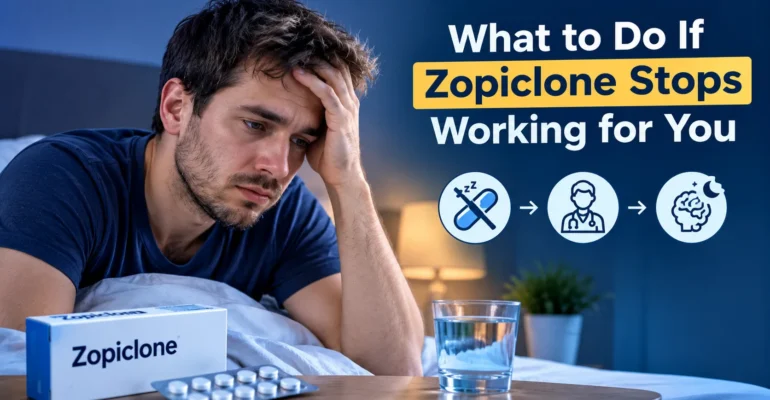
What to Do If Zopiclone Stops Working for You
Medical Disclaimer: This article is for informational purposes only and does not replace professional medical advice. Always consult your GP before changing or stopping any medication.
When you first started taking zopiclone, it likely felt like a lifeline. After nights of tossing and turning, you finally got the rest you desperately needed. But now, weeks or months later, you are lying awake again wondering why your zopiclone stopped working. If your sleeping pill no longer helps you drift off, you are not alone — and more importantly, there are safe steps you can take.
In this guide, we explain why zopiclone is not working anymore, the risks of tolerance, and exactly what to do next to reclaim your sleep without putting your health at risk.
Why Does Zopiclone Stop Working?
Zopiclone belongs to a class of medicines known as Z-drugs, prescribed widely across the UK for short-term insomnia relief. It works by enhancing the activity of GABA — a calming neurotransmitter in your brain. However, the human body is remarkably adaptive. Over time, your brain can downregulate GABA receptors in response to regular zopiclone use. This biological adjustment is known as tolerance.
When tolerance develops, the same 7.5mg or 3.75mg dose that once knocked you out now has little to no effect. You may find yourself:
- Lying awake for hours after taking your tablet
- Waking frequently during the night
- Needing a higher dose to feel any effect
- Experiencing rebound insomnia when you try to skip a night
Tolerance typically develops after 2–4 weeks of continuous use, which is why the NHS and the BNF (British National Formulary) recommend zopiclone only for short-term treatment.
Signs Your Zopiclone Has Stopped Working
Before you panic, it is worth confirming whether you are genuinely experiencing tolerance or simply having a few bad nights. Here are clear signs that your sleeping pills are not working as they should:
- Sleep onset takes longer than 30 minutes despite taking zopiclone as prescribed
- Fragmented sleep: You wake up multiple times and struggle to fall back asleep
- Early morning awakening: You consistently wake at 4 or 5 AM and cannot return to sleep
- Daytime fatigue persists because your sleep quality has declined
- The urge to increase your dose without medical supervision
If two or more of these apply to you, it is time to take action — but not by simply taking another pill.
What NOT to Do If Zopiclone Stops Working
When sleep medication loses its power, frustration can lead to poor decisions. Avoid these common but dangerous mistakes:
Do Not Increase Your Dose Without Medical Advice
Doubling up on zopiclone because it is not working anymore significantly increases your risk of side effects, including metallic taste, drowsiness, confusion, and in severe cases, respiratory depression. It also accelerates dependence.
Do Not Mix With Alcohol or Other Sedatives
Some people try to “boost” zopiclone with alcohol or over-the-counter antihistamines. This is extremely dangerous and can lead to overdose, memory blackouts, or accidents. Read our FAQ page for more on safe zopiclone use.
Do Not Buy Stronger Sleeping Pills Online Illegally
If your usual source cannot help, you might be tempted by unregulated websites selling stronger benzodiazepines. This is both illegal and medically risky. Always purchase from a legitimate UK-registered pharmacy after proper consultation.
What to Do If Zopiclone Stops Working: 5 Safe Steps
1. Speak to Your GP or Prescriber Immediately
The first and most important step is to book an appointment with your doctor. Tolerance and dependence are clinical issues that require professional management. Your GP may:
- Review your original insomnia diagnosis
- Check for underlying conditions (anxiety, depression, sleep apnoea, restless leg syndrome)
- Create a structured tapering plan to reduce your dose safely
- Discuss zopiclone alternatives suited to your situation
According to NHS guidance on zopiclone, this medication should not be stopped abruptly after long-term use due to withdrawal risks.
2. Review and Improve Your Sleep Hygiene
Medication works best when paired with healthy sleep habits. If your zopiclone tolerance has grown, your sleep hygiene may have slipped without you noticing. Reinforce these fundamentals:
- Consistent schedule: Go to bed and wake up at the same time every day — yes, even weekends
- Limit screen time: Blue light suppresses melatonin. Switch off devices 60–90 minutes before bed
- Optimise your bedroom: Keep it cool (16–18°C), dark, and quiet
- Avoid caffeine after midday: It has a half-life of 5–6 hours and can sabotage sleep onset
- Reserve your bed for sleep: No working, eating, or scrolling in bed
Improving sleep hygiene alone can reduce your reliance on medication and make any future treatment more effective.
3. Consider Cognitive Behavioural Therapy for Insomnia (CBT-I)
CBT-I is the gold-standard treatment for chronic insomnia and is recommended by the NHS before or alongside sleeping pills. Unlike medication, CBT-I addresses the root psychological and behavioural causes of sleeplessness.
A structured CBT-I programme typically includes:
- Stimulus control: Reassociating your bed with sleep rather than wakefulness
- Sleep restriction: Temporarily limiting time in bed to consolidate sleep
- Cognitive restructuring: Challenging anxious thoughts about sleep
- Relaxation training: Progressive muscle relaxation and breathing techniques
You can access CBT-I through your GP, private therapists, or reputable digital programmes. For more information, visit the NHS tips to beat insomnia.
4. Explore Alternative Medications (With Your Doctor)
If zopiclone is no longer effective, your prescriber might suggest other options. Common zopiclone alternatives in the UK include:
- Melatonin: A natural hormone-based option, particularly useful for circadian rhythm disorders
- Low-dose sedating antihistamines: Such as promethazine, though these are not ideal for long-term use
- Other Z-drugs: Like zolpidem or eszopiclone, though cross-tolerance can occur
- Low-dose amitriptyline or mirtazapine: Prescribed off-label when insomnia coexists with depression or pain
Never switch medications without medical supervision. What works for one person may be unsafe for another due to age, health conditions, or drug interactions.
5. Taper Off Zopiclone Safely
If you have been taking zopiclone for more than a few weeks, your doctor will likely recommend a gradual taper rather than an abrupt stop. A typical tapering schedule might reduce your dose by 25–50% every 1–2 weeks, depending on how long you have been using it and your current dose.
During tapering, you may experience:
- Rebound insomnia (temporarily worse sleep)
- Anxiety or irritability
- Mild tremors or sweating
These symptoms are usually short-lived and manageable with the right support. Our team can guide you on accessing legitimate, short-term supplies if your prescriber advises a controlled tapering plan.
Can You Prevent Zopiclone From Stopping Working?
Prevention is always better than cure. To reduce the risk of tolerance:
- Use zopiclone only for short courses (ideally 2–5 days, maximum 2–3 weeks)
- Take it only when absolutely necessary, not every night out of habit
- Combine it with non-drug strategies like CBT-I and sleep hygiene
- Have regular medication reviews with your GP
If you are buying zopiclone online in the UK, ensure you are using a responsible pharmacy that emphasises short-term use and patient safety. Read our customer testimonials to see how we support safe, informed purchases.
When to Seek Urgent Help
In rare cases, tolerance can mask escalating dependence. Seek urgent medical attention if you experience:
- Severe confusion or memory loss
- Difficulty breathing or chest tightness
- Suicidal thoughts or severe depression
- Signs of overdose after increasing your dose
Final Thoughts: You Have Options
Discovering that your zopiclone is not working anymore can feel discouraging, but it is not the end of the road. Tolerance is a known, well-documented effect of sleeping pills — not a personal failure. By working with your GP, improving your sleep hygiene, and exploring evidence-based treatments like CBT-I, you can overcome chronic insomnia without becoming trapped in a cycle of increasing medication.
If you have questions about zopiclone use, dosage, or legitimate purchasing options in the UK, contact our support team or speak with your healthcare provider.
Related Reads: